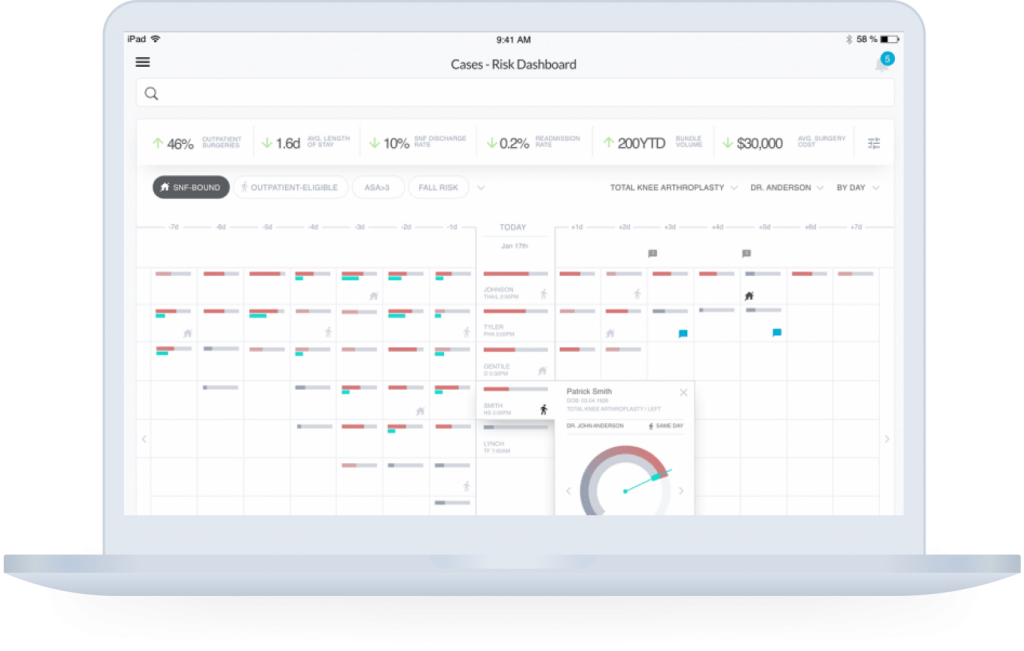
Ajackus enhanced Ready Surgery’s web and iOS platforms with an AI-powered recommendation engine and HIPAA-compliant infrastructure, enabling surgical teams to make proactive, data-driven decisions to reduce preventable complications.

Engagement Model
Team Augmentation
Your team, supercharged — every Ajackus engineer comes AI-native, shipping 40–60% faster from day one
Managed Delivery
Tell us the problem. We handle everything — discovery, architecture, build, testing, deployment — at AI speed
BOT Model
We build your offshore engineering center with AI-trained teams, operate it to maturity, then transfer ownership to you
Expertise
AI Development
Custom AI agents, LLM integrations, RAG pipelines, and AI enablement — from strategy to production
Web Development
Enterprise web applications built with AI-augmented engineering for 40-60% faster delivery
Mobile Development
Native and cross-platform mobile apps built at AI pace with rigorous automated quality
DevOps
Infrastructure that scales automatically, deploys safely, and costs less
Low-Code/No-Code
Airtable, Glide, Shopify, and WordPress solutions with AI automation layers — built in days
Data Analytics
Turn raw data into decisions that drive revenue — 80% faster with AI-assisted analytics
UI/UX Design
User-centered interfaces designed with AI-powered speed — 3x faster iteration, sharper insights


How Ready Surgery Enhanced Surgical Risk Intelligence with an AI-Powered Decision Support Platform
Services
Mobile Application Development
Web Application Development
Healthcare Platform Engineering
Technologies


50%+
of Surgical Harm Cases Are Preventable
AI-Powered
Risk Recommendation Engine
HIPAA
Compliant Infrastructure
Overview
Executive Summary
Client
Challenge
Goals
Journey
Results
Technology
Takeaways
FAQ
Executive Summary
The Problem
Post-operative complications affect up to 25% of surgical patients, with more than half of surgical harm cases considered potentially preventable — yet surgical teams lacked structured, real-time tools to act on patient risk data before harm occurred. Ready Surgery’s existing web and iOS platforms needed significant enhancement to meet the usability and trust standards required for clinical adoption.
The Solution
The Ajackus team enhanced both Ready Surgery’s web and iOS platforms, delivering an AI-powered recommendation engine that integrated surgical risk intelligence directly into clinical decision-making workflows, alongside HIPAA-compliant infrastructure covering encrypted data handling, role-based access controls, and audit logging across both platforms.
The Result
Ready Surgery achieved a more trusted, more widely adopted platform among its target clinical user base — surgeons, coordinators, and anaesthesiologists — with streamlined workflows that deliver actionable risk guidance at the point of care and HIPAA compliance that removes the primary barrier to institutional deployment.
Client
Ready Surgery is a surgical risk intelligence platform whose mission is to place evidence-based risk guidance directly in the hands of surgical teams before and during procedures. The engagement required Ajackus to enhance existing web and iOS applications with AI-powered decision support and HIPAA-compliant infrastructure — meeting the trust and compliance standards that healthcare institutions demand before deploying clinical software.
| Company | Ready Surgery |
| Industry | Healthcare / Surgical Risk Intelligence |
| Platform Type | Clinical decision support — web and iOS |
| Target Users | Surgeons, surgical coordinators, anaesthesiologists |
| Compliance | HIPAA |
Challenge
The Bottom Line
Surgical complications are frequent and largely preventable — but existing clinical workflows gave surgical teams no structured, real-time mechanism to act on patient risk data before harm occurred. Ready Surgery needed a platform that embedded risk intelligence into the surgical workflow itself, not as a reporting tool consulted after the fact.
The scale of preventable surgical harm is well-documented: post-operative complication rates of up to 25%, with crude mortality rates between 0.5% and 5% for major procedures. The majority of these adverse outcomes are considered preventable with appropriate pre-operative assessment and intraoperative awareness. Yet surgical teams frequently lacked the tools to act on patient risk profiles systematically — relying instead on individual clinical judgement without structured data support.
Ready Surgery had built a platform to address this gap, but the web and iOS applications needed significant enhancement to meet the usability and trust standards required for clinical adoption. The AI recommendation engine was not yet deeply integrated into the surgical workflow, and the platform’s security posture needed to meet HIPAA requirements to be deployable across healthcare institutions.
A Uniquely High Trust Threshold
Clinical software faces a uniquely high adoption bar: surgical teams will only use a decision-support tool if it is fast, reliable, and clearly protective of patient data. Ajackus had to deliver enhancements that met all three criteria simultaneously — usability, AI integration, and HIPAA compliance could not be traded against each other.
Goals
The platform needed to embed AI-powered risk intelligence into clinical workflows at the point of care, achieve HIPAA compliance across web and iOS, and deliver a user experience that surgical teams would actually adopt in practice.
| Goal | Success Criterion |
|---|---|
| Integrate AI recommendation engine into clinical workflow | Risk intelligence surfaced at relevant points in the surgical workflow |
| Automate surgical risk assessment workflows | Reduced manual steps for surgical coordinators and anaesthesiologists |
| Achieve HIPAA compliance across web and iOS platforms | HIPAA-compliant data handling verified across all patient data touchpoints |
| Improve platform adoption among surgical teams | Increased engagement from surgeons, coordinators, and anaesthesiologists |
| Elevate patient safety outcomes through proactive intervention | Platform used proactively in surgical planning, not retrospectively |
Journey
The Ajackus team approached this engagement with a clinical workflow lens — understanding how surgeons, coordinators, and anaesthesiologists actually used the platform before designing enhancements. The goal was to embed risk intelligence into the natural flow of work, not to add friction or require separate tool-switching.
AI-Powered Surgical Risk Recommendation Engine
The centrepiece of the engagement was integrating an AI-powered recommendation engine into Ready Surgery’s clinical workflow. The Ajackus team built the engine to surface patient-specific risk flags and evidence-based intervention recommendations at the relevant points in the surgical planning and pre-operative workflow. Rather than generating a static risk report for clinical teams to interpret independently, the engine provided contextualised guidance — translating risk data into specific, actionable recommendations that surgical teams could act on directly.
Automated Surgical Workflow Streamlining
Ajackus engineers mapped the existing surgical coordination workflow and identified manual, repetitive steps that added latency without clinical value. These were replaced with automated processes — reducing the administrative burden on surgical coordinators and freeing clinical attention for patient care. Workflow changes were designed to integrate with existing hospital processes rather than require process replacement.
HIPAA-Compliant Infrastructure
Patient data in a surgical risk platform is among the most sensitive in healthcare. The Ajackus team implemented HIPAA-compliant data handling across both the web and iOS platforms: encrypted data storage and transmission, access controls aligned to clinical role, audit logging for compliance verification, and secure authentication. This infrastructure was a prerequisite for institutional adoption and positioned Ready Surgery for deployment across regulated healthcare environments.
Cross-Platform Enhancement (Web and iOS)
Ajackus delivered enhancements across both the web and iOS applications, ensuring that surgical teams had a consistent, reliable experience regardless of which device or interface they used. The iOS enhancements were particularly important for intraoperative use, where surgeons and anaesthesiologists needed rapid, mobile access to risk data without leaving the sterile field.
Results
Ready Surgery achieved improved clinical adoption and trust among surgical teams, with AI-powered risk recommendations embedded into surgical workflows and HIPAA compliance established across web and iOS — removing the institutional deployment barrier and positioning the platform for broader healthcare institution partnerships.
AI-Powered
Recommendations in Surgical Workflow
HIPAA
Compliance Achieved Across Web and iOS
Improved
Clinical Team Adoption and Trust
What went well:
Clinical Platform Delivery
- AI recommendation engine integrated into surgical planning workflow — surfacing risk flags at the point of relevance, not in a separate reporting interface
- Manual administrative steps eliminated from surgical coordination workflow, reducing overhead without requiring process replacement
- Consistent user experience delivered across web and iOS — including rapid mobile access for intraoperative use
Technical Achievements
- HIPAA-compliant infrastructure implemented across both platforms: encrypted storage and transmission, role-based access controls, audit logging, and secure authentication
- AI engine designed to deliver contextualised, actionable recommendations — not static risk reports requiring clinical interpretation
- Compliance built at the infrastructure level, invisible to end users, with no performance trade-off at the clinical interface
Business Impact
- Improved adoption among surgeons, coordinators, and anaesthesiologists — the demanding professional audience that validates platform quality
- HIPAA compliance removes the primary institutional barrier, enabling Ready Surgery to engage hospital procurement and compliance teams with confidence
- Platform positioned for deployment across regulated healthcare environments where data security is a non-negotiable requirement
Why It Worked
Intelligence at the Point of Care
By embedding the AI recommendation engine directly into the surgical workflow, the Ajackus team transformed Ready Surgery from a reporting tool into a proactive decision-support system. Surgical teams received risk intelligence at the moment it was relevant — not after the fact — enabling interventions that directly addressed the preventable harm the platform was built to reduce.
Compliance as a Market Enabler
HIPAA compliance is not just a regulatory requirement — it is a trust signal that determines whether healthcare institutions will deploy a clinical tool at all. By building HIPAA-compliant infrastructure across web and iOS, Ajackus engineers removed the primary institutional barrier to adoption, enabling Ready Surgery to engage hospital procurement and compliance teams with confidence.
A Platform Surgical Teams Trust
Clinical adoption is earned through reliability, speed, and data integrity — not marketing. The Ajackus team’s focus on workflow integration and security resulted in a platform that surgeons, coordinators, and anaesthesiologists found trustworthy enough to incorporate into their patient care routines. Elevated adoption among these demanding professional users validated both the platform design and the engineering quality.
Frequently Asked Questions
How does Ajackus approach AI integration in regulated healthcare platforms?
Ajackus engineers begin by understanding the clinical workflow before designing AI integrations — ensuring that recommendations surface at the right point in the process and are presented in a format that clinicians can act on immediately. For Ready Surgery, this meant integrating the recommendation engine into the surgical planning workflow rather than generating standalone reports. Compliance requirements (HIPAA in this case) are addressed as infrastructure-level concerns, not add-ons.
Can Ajackus build HIPAA-compliant web and mobile applications?
Yes. Ajackus has experience building HIPAA-compliant platforms across web and iOS. For Ready Surgery, this included encrypted data storage and transmission, role-based access controls aligned to clinical function, audit logging for compliance verification, and secure authentication. Ajackus engineers apply HIPAA safeguards as foundational infrastructure rather than retrofitting compliance after development.
What is Ajackus's experience with healthcare decision-support tools?
Ajackus has built and enhanced healthcare platforms across surgical risk intelligence, mental health assessment, digital health prescriptions, and patient engagement. Across these engagements, Ajackus engineers have experience translating clinical methodology into software logic, integrating AI recommendations into clinical workflows, and building to the data security standards healthcare institutions require.
How does Ajackus balance clinical usability with technical requirements like compliance?
Compliance infrastructure is built at the platform level so it is invisible to end users. Ajackus engineers implement HIPAA-compliant data handling, authentication, and audit trails as backend and infrastructure concerns — so surgical teams interact with a fast, intuitive interface without encountering compliance friction. Usability and compliance are treated as parallel requirements, not trade-offs.
What types of healthcare clients does Ajackus typically work with?
Ajackus works with healthcare technology companies across digital health, clinical decision support, health assessment, patient engagement, and health data platforms. Clients range from early-stage HealthTech startups to established platforms serving regulated healthcare institutions. Ajackus brings both technical depth and an understanding of the trust and compliance standards the healthcare sector demands.





Let’s Build your Project Together